Your Android App May Already Be Blocked From Shipping Updates
Three Google Play requirements could block your next Android app update: 16 KB page-size support, target API level 36, and Google Play Billing Library compliance.

Webnyxa Technologies
22 views
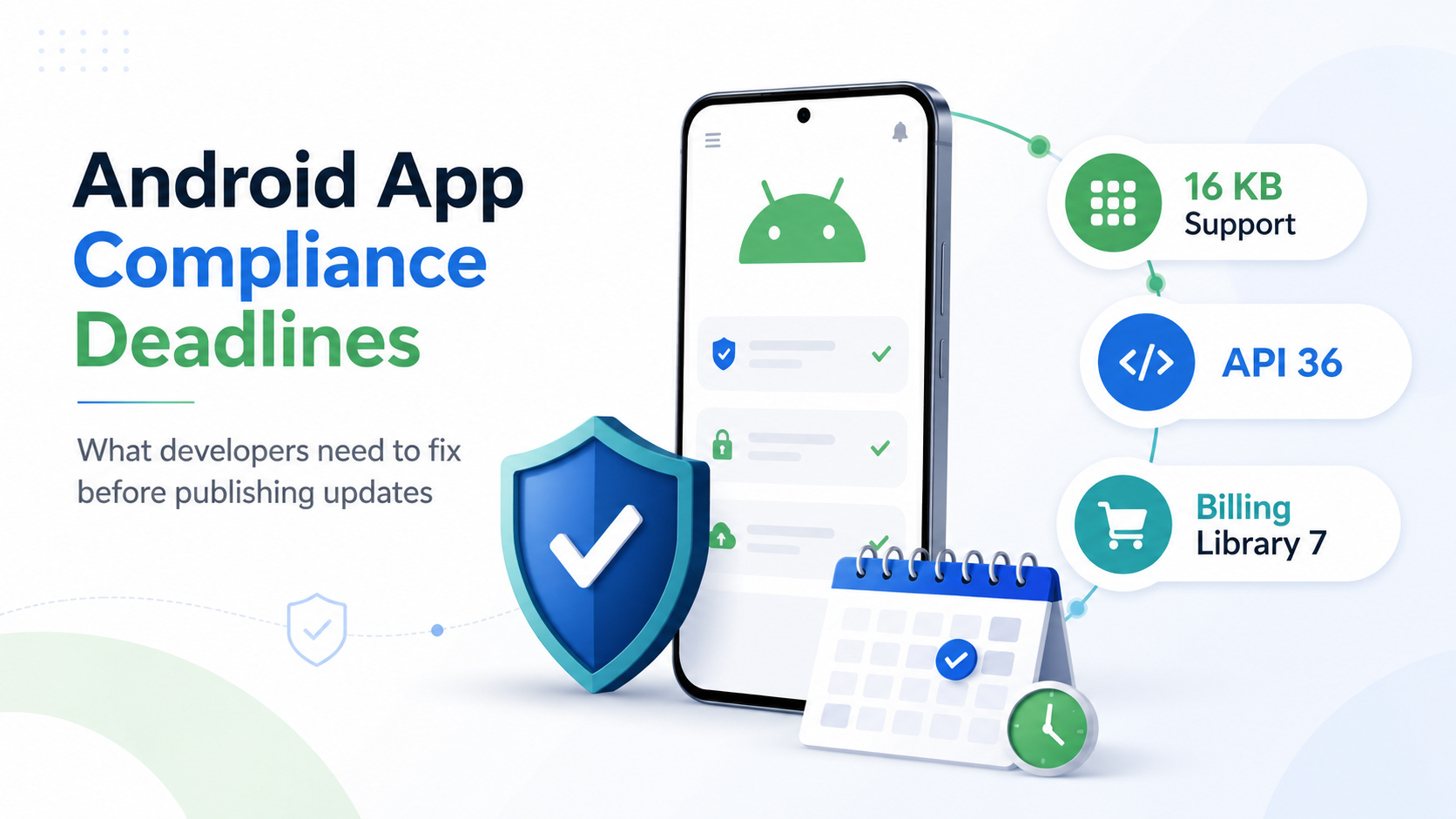
TL;DR: Android developers need to review three major Google Play requirements. App updates containing native code must support 16 KB memory page sizes, new apps and updates must target Android 16 (API level 36) by August 31, 2026, and apps using Google Play Billing Library 7 must migrate to a supported version before its submission deadline. Apps that do not support 16 KB page sizes are not automatically removed solely for this reason, but non-compliant updates may be blocked.
Google says that after the extension deadline, app updates must be compatible with 16 KB page sizes. It does not state that existing apps are automatically removed solely because of this requirement.
If your last Play Console upload triggered a warning about "16 KB page sizes," "target API level," or "Billing Library," you're not looking at a future problem. Part of it already happened.
Here's what's actually going on, broken into three separate deadlines that Google has bundled together in developer messaging—which is exactly why most teams misread them.
16 KB Page Size Support — Deadline Already Passed
Starting November 1, 2025, new apps and updates to existing apps submitted to Google Play and targeting Android 15 or higher were required to support 16 KB memory page sizes.
Eligible developers could request an extension until May 31, 2026. After the applicable deadline, app updates must be compatible with 16 KB memory page sizes.
This does not mean that an existing app will automatically be removed from Google Play solely because it does not support 16 KB page sizes. However, the developer may be unable to publish further updates until the app becomes compliant.
Google’s documentation says that the November 1, 2025 requirement applied to both new apps and updates to existing apps targeting Android 15 or higher. The May 31, 2026 date was an extension deadline.
This one catches teams off guard because it's not a code change you make—it's a rebuild.
If your app ships any native library, including:
A React Native native module
A Flutter plugin with native bindings
An old NDK dependency
A third-party SDK that hasn't been updated
You can't patch your way around it.
If a vendor SDK you depend on hasn't shipped a 16 KB-compatible build, your app is stuck until they do—or until you replace it.
If you haven't specifically tested your app on a 16 KB page size emulator image, don't assume you're fine because your last build went through.
Google's rollout has been staged, and the warnings get stricter as more devices ship with 16 KB pages as the default.
Official Google documentation: developer.android.com/guide/practices/page-sizes
Target API Level 36 — Deadline: August 31, 2026
This is Google's standard annual requirement:
New apps and updates must target Android 16 (API level 36) by August 31, 2026.
This one is more familiar territory—most teams have been through a target SDK bump before.
The risk is assuming it's "just a version number change."
Raising targetSdkVersion changes default behavior around:
Permissions
Background execution
Notification handling
Storage access
Apps that haven't updated their target SDK in two or three years often discover multiple features silently break during this bump—not after release, but during internal testing (assuming they're testing properly).
Official Google documentation: support.google.com/googleplay/android-developer/answer/11926878
Google Play Billing Library 7 — Deprecated August 31, 2026
If your app sells subscriptions or in-app purchases, check which Google Play Billing Library version it currently uses.
The standard submission deadline for Billing Library 6 was August 31, 2025. The standard deadline for submitting new apps and updates using Billing Library 7 is August 31, 2026. Developers using Billing Library 7 may be eligible for an extension until November 1, 2026.
Apps still using Billing Library 6 should be migrated immediately. Apps using Billing Library 7 should be migrated to a currently supported version before the applicable deadline.
Google’s official table lists August 31, 2025 for Billing Library 6 and August 31, 2026 for Billing Library 7.
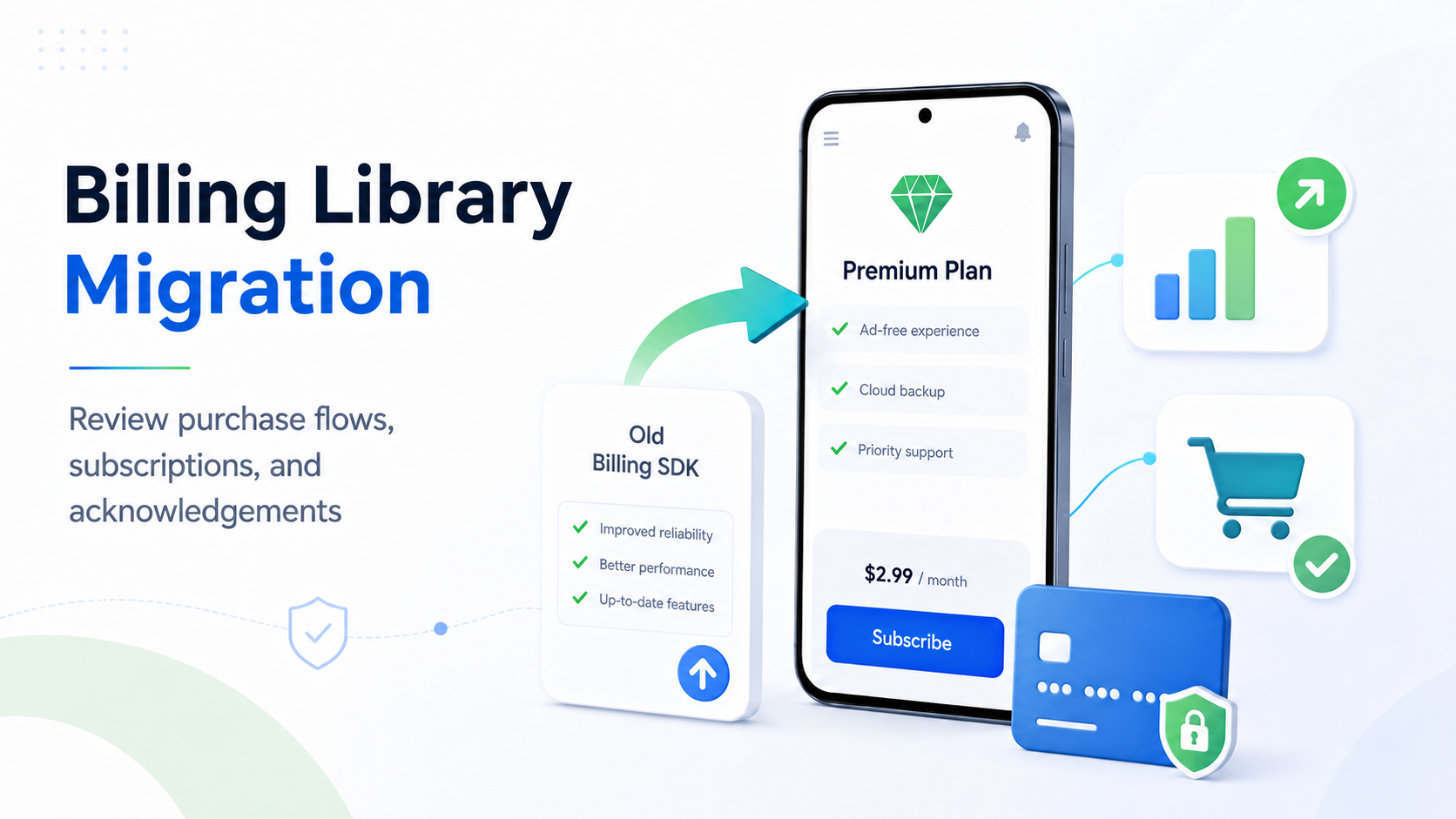
Migrating isn't a drop-in dependency bump.
Between major versions, changes affect:
Purchase flows
Purchase acknowledgement logic
Teams that rush this migration often ship subscription bugs, not upgrade bugs—which is worse because it results in lost revenue, not just a rejected Play Store submission.
Official Google documentation: developer.android.com/google/play/billing/deprecation-faq
Why This Is Hitting So Many Apps at Once
These three requirements come from different parts of Google's Play policy calendar, but they all land within roughly the same six-week window.
A team that hasn't touched its Android build pipeline recently is very likely carrying all three issues simultaneously:
An outdated target SDK
An outdated Billing Library
Native dependencies that were never rebuilt for 16 KB page sizes
Fixing one often exposes the other two.
For example:
A Billing Library upgrade frequently requires a Gradle update.
The Gradle update often requires a newer Kotlin version.
Those upgrades then expose native dependencies that aren't compatible with 16 KB page sizes.
What to Check Right Now
Open your Play Console and verify the following:
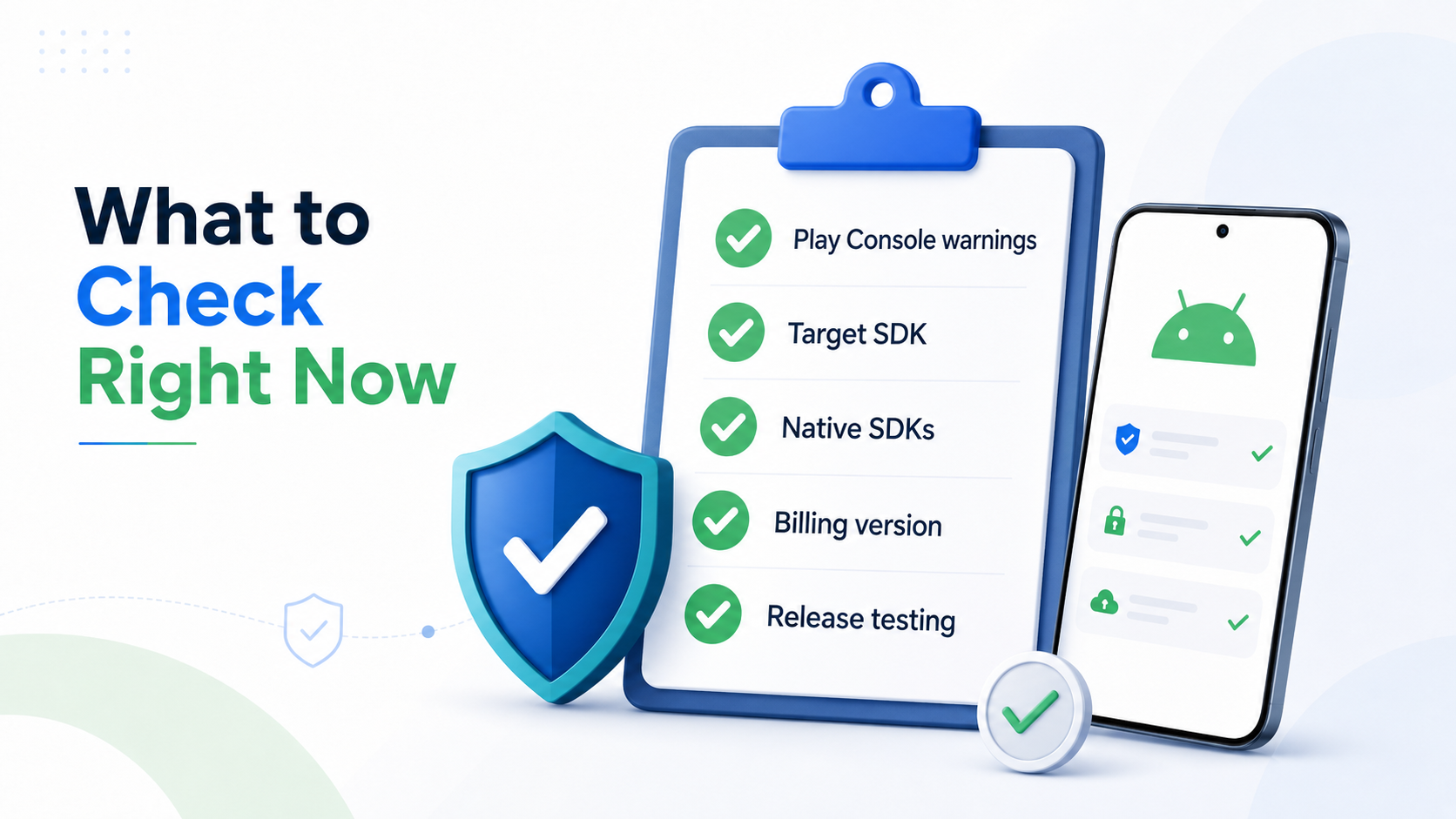
Check for existing warnings about:
Target API level
Billing Library version
16 KB page size compatibility
Confirm your
targetSdkVersionis already 36, or create a migration plan.
Check your Billing Library dependency in
build.gradle.
Billing Library 6 should be migrated immediately. Apps using Billing Library 7 need a migration plan before the applicable 2026 deadline.
List every native dependency and third-party SDK your app ships.
Verify each has published a 16 KB-compatible release.
Test a production build on a 16 KB page size emulator image before assuming compliance.
Final Thoughts
None of this requires rebuilding your app from scratch.
It does require someone to carefully review:
Every dependency
Build configuration
Purchase flow
Native libraries
That's easy to postpone until Play Console blocks your next release.
Need a Google Play Compliance Audit?
If you'd like a second set of eyes before this becomes a shipping problem, Webnyxa offers a fixed-scope Google Play Compliance Audit covering:
API Level 36 readiness
Billing Library migration
16 KB page size compatibility
You'll receive:
A clear compliance report
Identified blockers
Upgrade recommendations
An implementation estimate
Simply send us your Play Console warning, and we'll tell you exactly what's preventing your next release.
Technically reviewed by: Sandeep Kundu, Android Developer at Webnyxa Technologies
Comments
No comments yet. Be the first to share a thought.